


Visão geral
A Rússia, oficialmente Federação Russa, é um país transcontinental localizado no Leste Europeu e no Norte da Ásia. É o maior país do mundo em área territorial, cobrindo mais de um oitavo da área terrestre habitada da Terra, e o nono país mais populoso. A Rússia é uma república semipresidencialista, com o Presidente Vladimir Putin no poder desde 2012, após um período anterior de 2000 a 2008. O país desempenha um papel significativo na política global, sendo membro permanente do Conselho de Segurança das Nações Unidas e um dos principais produtores de petróleo e gás natural.
Contexto e histórico
A Rússia tem uma longa e complexa história, desde o Império Russo até a União Soviética e a atual Federação Russa. Após o colapso da União Soviética em 1991, o país passou por um período de transição política e econômica. Vladimir Putin emergiu como uma figura central na política russa no início dos anos 2000, consolidando o poder e buscando restaurar a influência russa no cenário internacional. A relação da Rússia com o Ocidente tem sido marcada por tensões, especialmente após a anexação da Crimeia em 2014 e a invasão da Ucrânia em 2022, resultando em sanções econômicas e isolamento diplomático. A guerra na Ucrânia continua a ter um impacto significativo nos mercados globais, influenciando, por exemplo, os preços do petróleo e a direção das bolsas de valores europeias.
Linha do tempo
- 19 de dezembro de 2025: O Presidente Vladimir Putin realiza sua conferência de imprensa anual, abordando temas como a guerra na Ucrânia, questões econômicas e sociais, e respondendo a perguntas variadas da população, incluindo algumas de tom sarcástico e outras sobre alienígenas.
- 29 de dezembro de 2025: A guerra na Ucrânia é citada como um dos fatores que impulsionam o avanço dos preços do petróleo no mercado global, enquanto o índice Dow Jones opera quase estável e as bolsas europeias apresentam direções variadas.
- 29 de dezembro de 2025: O presidente ucraniano Volodimir Zelensky se reúne com Donald Trump na Flórida para discutir um possível acordo de paz para a guerra na Ucrânia. Durante o encontro, os Estados Unidos oferecem garantias de segurança à Ucrânia por 15 anos, prorrogáveis, mas Zelensky solicita um prazo maior, de 30, 40 ou 50 anos, para as garantias.
Principais atores
- Vladimir Putin: Presidente da Rússia, figura central na política russa e internacional.
- População russa: Cidadãos que participam de eventos como a "Linha Direta" anual, enviando perguntas e comentários sobre a situação do país.
- Roskomnadzor: Órgão regulador de comunicações da Rússia, responsável por monitorar e, por vezes, bloquear plataformas digitais estrangeiras.
- Partido Rússia Unida: Partido político governista na Rússia, que detém a maioria nas eleições.
- Donald Trump: Presidente dos Estados Unidos, envolvido em negociações para um possível acordo de paz na guerra da Ucrânia e na discussão de garantias de segurança para o país.
Termos importantes
- Conferência de imprensa anual (Linha Direta): Evento televisionado onde o Presidente Putin responde a perguntas de jornalistas e cidadãos russos sobre uma ampla gama de tópicos.
- 3I/Atlas: Cometa mencionado durante a conferência de imprensa de Putin, que gerou uma pergunta sobre sua possível natureza extraterrestre.
- Guerra na Ucrânia: Conflito militar em curso que domina grande parte da agenda política e midiática russa e internacional, com impactos econômicos globais. Inclui esforços diplomáticos e negociações para acordos de paz e garantias de segurança para a Ucrânia.
- Dow Jones: Um dos principais índices do mercado de ações dos Estados Unidos, usado como indicador da saúde econômica global.
- Bolsas europeias: Mercados de ações na Europa, cujas operações podem ser influenciadas por eventos geopolíticos como a guerra na Ucrânia.
- Garantias de segurança: Acordos ou promessas de proteção militar ou assistência a um país, frequentemente discutidos em contextos de conflito como a guerra na Ucrânia.
Notícias relacionadas
Rússia e Síria formalizam acordo sobre bases militares
10 de ago, 2026
Ataques aéreos em Kyiv deixam ao menos 21 mortos
2 de jul, 2026
Rússia utiliza Dia da Vitória para legitimar invasão da Ucrânia
11 de mai, 2026
Desfile do Dia da Vitória em Moscou será menor e sem tanques
8 de mai, 2026
Rússia institui Dia da Lembrança do Genocídio Soviético na 2ª Guerra
19 de abr, 2026
Posts no X
Kiev moron's request to “block” Russia’s Rassvet satellites can only imply their destruction, a sure way to a full-scale space war. I hope the US gets this. Otherwise, Starlink satellites will drop like flies. Space is a cramped place so it's a must to be mutually polite.
Abrir no X
We need to be monitoring every port of entry on the planet.... yesterday. If not, we’re putting our whole biosecurity bet in situations like this on: - the remoteness of this facility in an interconnected world - the competency and care of the FSB We need global collection and monitoring immediately so we can track this if (as) it starts moving out of Siberia (or every time something like this happens)
 Annie Jacobsen@AnnieJacobsen·
🚨Breaking. There's been a pneumonic plague outbreak at a BSL-3 lab in Siberia, Russia.🚨 "Nearly 200 People Under Observation After Irkutsk Lab Worker Dies From Plague" - Moscow Times This is fact, and also the inciting incident in my book BIOLOGICAL WAR: A SCENARIO, which is unnerving. Will post more as I learn more, including from Russian speaking sources🧵 t.co/zd4u0iVhHK

Treasury is dismantling the financial infrastructure that allows Iran and other adversaries to evade sanctions, move illicit funds, and undermine the integrity of the global financial system. Today’s action targeting A7 continues Treasury’s unprecedented efforts to isolate Iran and its financial enablers and sends a clear message that if you facilitate illicit finance for America’s adversaries, you will lose access to the U.S. financial system.
 Treasury Department@USTreasury·
Today, Treasury took unprecedented action against the A7 Network, a shadow banking network with ties to Russia used by the Iranian regime to evade sanctions as part of Operation Economic Outcast. Treasury’s @FinCENnews proposed a rule that would prohibit transmittals of funds regarding transactions involving the A7 Network’s Sub-Agents. Additionally, FinCEN issued an Alert to help financial institutions detect and report suspicious activity related to the A7 Network. Treasury’s Office of Foreign Assets Control sanctioned the A7 Network as a significant transnational criminal organization. t.co/JNPt5XZh12

.@DoxxnetHQ founder Barrett Lyon on data center myths versus reality: jobs, talent, and faster internet. "That's the other thing that's driving me crazy, is people don't understand data centers at all... Data centers have been around for a very, very long time." "People are being manipulated with this data center thing... It's very interesting to be in the know and then watch this and go, oh my goodness, these people are missing the mark." "The big data center park in Virginia, you just see bunny rabbits in the field. There's nothing. It's just a big building and a bunch of parking lot and then nothing." "It brings jobs. The people that work in them aren't getting paid pennies. And it also brings high tech talent. And then also infrastructure, and infrastructure powers everything you do. So if you have a data center nearby, your internet's faster. Things like that work better." @BarrettLyon @YODELAGARZA

 a16z@a16z·
.@BarrettLyon built the first cloud DDoS-protection service, mapped the entire internet (now on display in New York's Museum of Modern Art), and got chased out of Moscow hunting Russian extortionists. His new company is t.co/7CSqPoBhAR, a parallel internet designed to keep advertisers, trackers, and creepy VPNs out of your life. Barrett joins a16z's Joel de la Garza to explain what it is and how it works: a private network where messages, calls, and files travel directly between people instead of through someone else's server, and where nobody needs your name, number, or email to reach you. They also get into why most VPNs are "just entry and exit points," why you can't set policy on equipment you don't own, the day Barrett's plane lost power over Oakland on the way home from a16z, and the data center myths that drive him crazy. 0:50 Meet Barrett Lyon 1:31 Losing an engine over Oakland 7:08 The hacker name behind the company 10:12 Censorship is coming to the US 13:17 Why VPNs barely protect you 14:21 Building a parallel internet 16:30 20GB files with no middleman 17:57 Free VPNs sell you 21:47 Why you must own the hardware 22:27 26 data centers, 12 people, run by AI 25:03 Data centers don't drink water 29:17 What ad trackers know about you 32:35 The DDoS attacks that built Prolexic 36:17 Mapping the internet for $50 39:46 Hunting extortionists in Moscow 41:47 Starlink at Burning Man YouTube: t.co/DaFO40cexH @BarrettLyon @YODELAGARZA
.@BarrettLyon built the first cloud DDoS-protection service, mapped the entire internet (now on display in New York's Museum of Modern Art), and got chased out of Moscow hunting Russian extortionists. His new company is t.co/7CSqPoBhAR, a parallel internet designed to keep advertisers, trackers, and creepy VPNs out of your life. Barrett joins a16z's Joel de la Garza to explain what it is and how it works: a private network where messages, calls, and files travel directly between people instead of through someone else's server, and where nobody needs your name, number, or email to reach you. They also get into why most VPNs are "just entry and exit points," why you can't set policy on equipment you don't own, the day Barrett's plane lost power over Oakland on the way home from a16z, and the data center myths that drive him crazy. 0:50 Meet Barrett Lyon 1:31 Losing an engine over Oakland 7:08 The hacker name behind the company 10:12 Censorship is coming to the US 13:17 Why VPNs barely protect you 14:21 Building a parallel internet 16:30 20GB files with no middleman 17:57 Free VPNs sell you 21:47 Why you must own the hardware 22:27 26 data centers, 12 people, run by AI 25:03 Data centers don't drink water 29:17 What ad trackers know about you 32:35 The DDoS attacks that built Prolexic 36:17 Mapping the internet for $50 39:46 Hunting extortionists in Moscow 41:47 Starlink at Burning Man YouTube: t.co/DaFO40cexH @BarrettLyon @YODELAGARZA
Abrir no X

Clear-eyed evidence-based thinking about new risks from AI isn’t “doomerism” - it’s meant to wake up the institutions and organizations to act before it’s too late. See below ⬇️
 Joshua Saxe@joshua_saxe·
*Security is sleeping on emerging catastrophic risks* (cross-post from my blog..) We've just seen: * a campaign that used agents to compromise ~100 businesses and steal about 600,000 credit cards with minimal human involvement; token costs were ~$25 per target successfully hacked. * Hacktron getting access to OpenAI’s monorepo by using Claude to exploit a blind buffer-overflow RCE in a way that (to me) felt superhuman. * OAI/Huggingface. * And, of course, there’s the ongoing explosion in newly discovered vulnerabilities. We've muddled through all manner of crises in security before, and for most AI attacks, cyber attack and defense will reach a natural equilibrium over the next few years, as we figure out how to mitigate cyber attackers who have limited goals like espionage and ransomware. But some cyber attackers will have maximalist or nihilistic goals, and I'm concerned about this because while yesterday's 'maximalist attackers' (e.g. Russia -> Ukraine, US/Israel -> Iran, Iran -> US) were bottlenecked by labor; today's aren't. I think it's hard to get true intuition for the shape of the risk here. As an intuition pump, imagine it’s a year from now -- Q4 2027 -- models are a year better (meaning open weight models are better than today's closed frontier), and in this environment, Iran unleashes a swarm of 100k hacking agents using a safety-stripped (let's say) GLM-5.6. Imagine the damage such an agent army could do given what we've observed with respect to the paper-thin resistance of today's networks to attacks from today's agents. I suspect the damage from such an attack would far exceed the damage caused by NotPetya ($10 billion USD ten years ago). Or imagine it’s Q4 2027 and an AI-security PhD student whose name rhymes with Morris, who's researching wormable offensive-agent harnesses in the lab, decides, out of nihilism or sheer recklessness, to release his creation into the wild. Imagine the size of the resulting, exponentially growing swarm, figuring that these local models, a year from now, will be at the level of today's Sonnet or Opus. Imagine instead of 800 reward-hacking OpenAI agents we now have 250k worm instances (WannaCry, a 2010s-era worm, had about this many). The challenge in mitigating expected damages from such scenarios is technical, political, and economic. From a microeconomic perspective, as AI improves, and as we continue not to see extreme catastrophes, we have a growing bubble of unpriced risk in which the security community, CISOs, CEOs, and boards may become lulled into complacency. We are, of course, already seeing this, as some within security think AI is “just another tool,” doesn’t change the fundamentals, won’t require incredible innovation to rise to the occasion of defending against it, etc. This complacency may fly when thinking about ordinary cybercrime, but it misses the emerging tail risks. There are three things those who recognize the dangers need to do here: Catalyze appropriate risk pricing. Try to get organizations informed enough to price this new, fattening and elongating tail of risk into their decision-making. Do this by forming an AI security observatory that distills information about emerging AI risks and broadcasts analyses, damage estimates, and forecasts to decision-makers. Use regulations and subsidies to ensure that critical infrastructure is paying down the risk. This acknowledges that critical-infrastructure organizations that fail to protect themselves from these new threats can impose the costs of cyber catastrophe on society as a whole. Develop moonshot technologies that make it cheap to pay down the risk. This acknowledges that the measures we may need to take—for example, rewriting entire codebases using memory-safe languages—may be too costly with today’s technology to reasonably prepare ourselves, and that innovation, some of which may need to be funded by government agencies and some by philanthropic funders like the OpenAI Foundation and Coefficient Giving, is necessary. The security community isn’t used to thinking in societal-disaster-planning terms and has in many ways become inured to them. But there’s no sane empirical case to be made that the risks aren’t here. I’d love to hear from readers about how you’re thinking about this. Full/longer version here: t.co/jOR5Ktdazb

Uma noite para lembrar a força de quem faz a cultura brasileira acontecer todos os dias, em todos os cantos do país. ❤️🇧🇷 Chico Buarque, Zeca Pagodinho, Daniela Mercury, Margareth Menezes, Russo Passapusso, Delacruz, Beth Mendes, Benedita da Silva e tantos outros artistas e trabalhadores da cultura reunidos para falar de identidade, memória, soberania, diversidade e futuro. Porque cultura também é isso: o amor que vira criação, trabalho, resistência e a possibilidade de um povo reconhecer a própria história.
Abrir no X
Some people might say alt text is not needed due to AI, but that solution excludes visually impaired bar patrons who don't read one of Croatian, Czech, Dutch, English, Finnish, French, German, Hindi, Indonesian, Italian, Norwegian, Portuguese, Russian, Spanish, Swedish, or Turkish.
 Siraj Hashmi@SirajAHashmi·
This might be my favorite article of all time. x.com/bostonglobe/st…

#AOVIVO Debate presidenciáveis na @VEJA Votar no Lula e Flávio é igual jogar no Tigrinho: você já perdeu, cara. O cidadão tem que realmente refletir sobre quem ele enxerga como alguém com capacidade de cuidar da vida dele. Se a gente realmente não chegar ao segundo turno, você sabe que isso aí vai ser uma roleta-russa. Ninguém muda o Brasil se não tiver, na própria história de vida, dignidade.Vamos votar em quem tem honestidade, capacidade moral e condição de governar o país.
Abrir no XYasser Arafat e Yitzahk Rabin foram estadistas. Desafiaram o passado para projetar um futuro de paz. Foram derrotados pelo ódio. Gerações de palestinos carregarão a dor e o trauma deixados pelo genocídio praticado pelo governo Netanyahu contra mulheres e crianças em Gaza. Civis israelenses pagaram o preço do radicalismo e da intolerância dos atos terroristas do Hamas. Perseguir o Tribunal Penal Internacional e seus integrantes é um estímulo para que esses crimes fiquem impunes. A relatora especial da ONU, Francesca Albanese, não pode ser silenciada por dizer a verdade. Os assentamentos ilegais na Cisjordânia tornam cada vez menos viável a solução de dois Estados, essencial para que israelenses e palestinos possam viver em segurança. Ameaçar civilizações de extinção não trará estabilidade para o Oriente Médio. O Estreito de Ormuz transformou-se em trincheira da guerra, quando deveria permanecer uma passagem vital para o comércio internacional. Famílias em todo o mundo pagam pelo aumento dos preços de combustíveis, fertilizantes e alimentos. A guerra entre Rússia e Ucrânia se arrasta há cinco anos, em um drama humanitário que continua a ceifar vidas. Todos sabemos que não haverá vencedores no campo de batalha. A diplomacia é a única opção. Iniciativas como o Grupo de Amigos da Paz, criado por Brasil e China, revelam que há forças na comunidade internacional dispostas a trabalhar pelo diálogo.
Abrir no XPosts dos perfis que monitoramos em /perfis que citam o tema, como publicados.
Vídeos
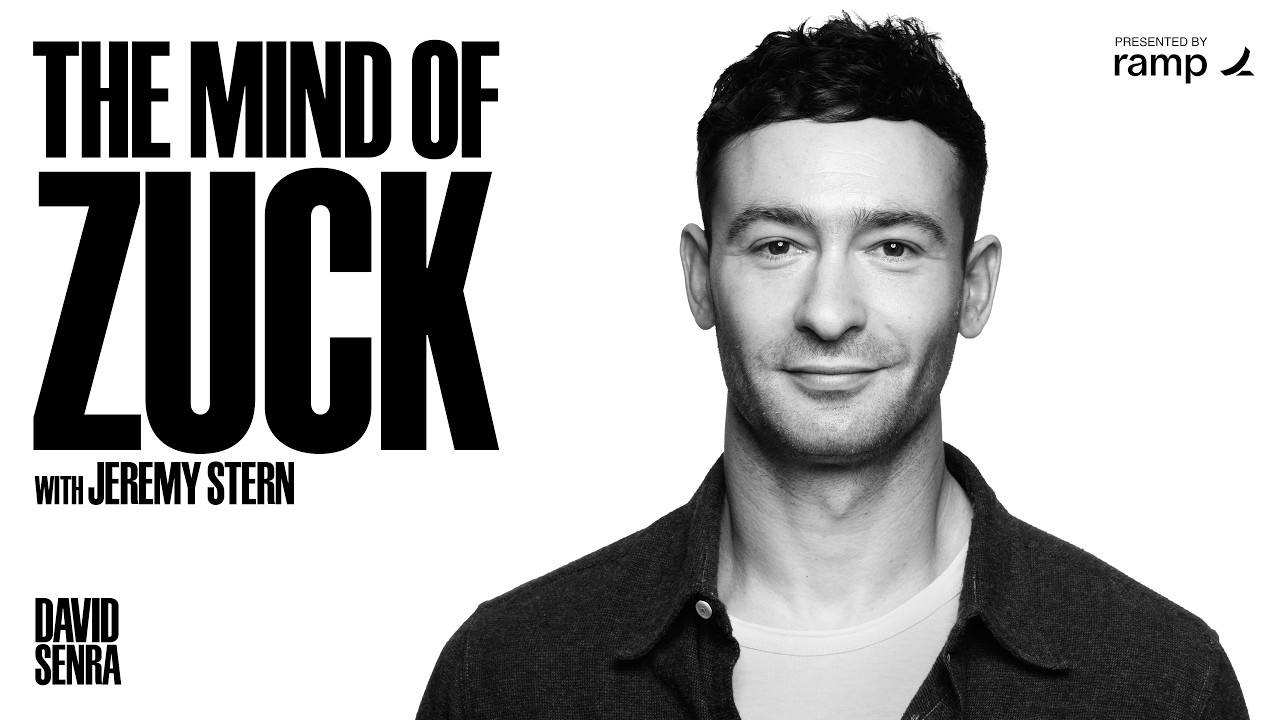 1:08:11
How Mark Zuckerberg, Palmer Luckey, Josh Kushner & Scott Wu Think | Jeremy Stern
David Senra · 04/10/2026
 52:40
52:40Sarah Paine — Why wars are so difficult to end
Dwarkesh Patel · 25/09/2026
 2:54:51
Cultura com Lula
Lula · 23/09/2026
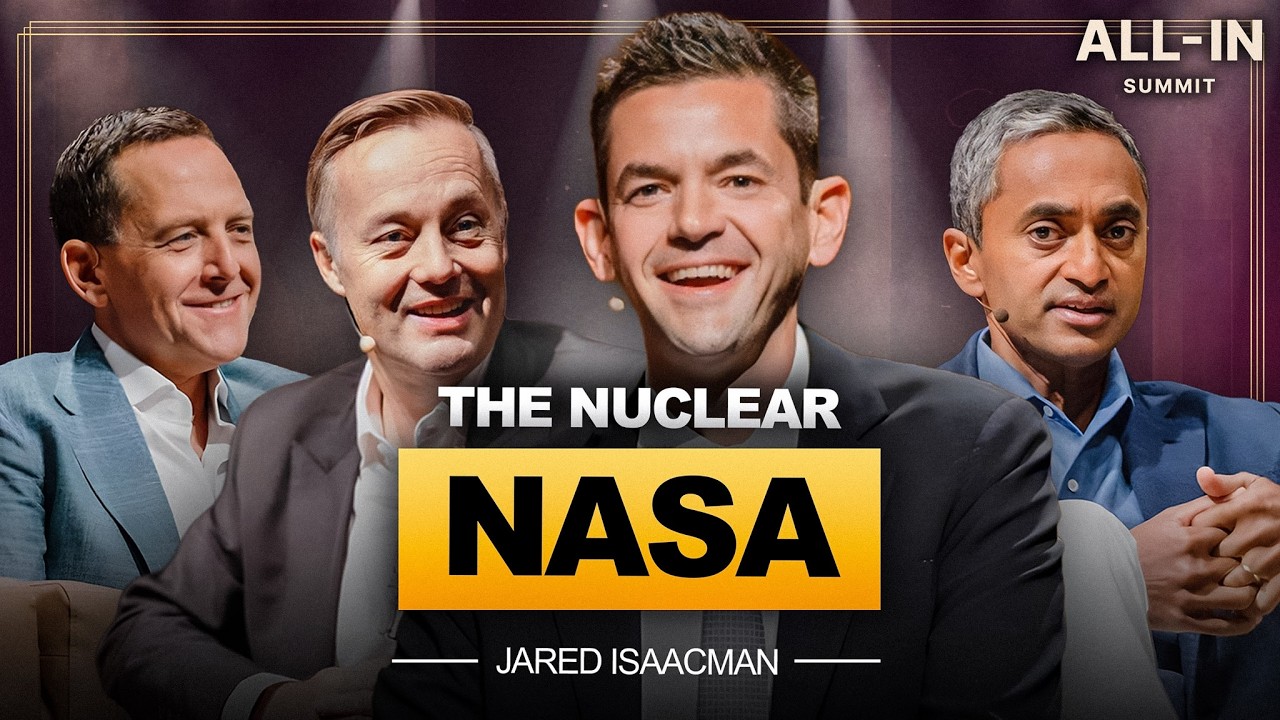 38:34
38:34Jared Isaacman: A New Era for NASA and American Space Exploration
All-In Podcast · 18/09/2026
 1:36:41
Nvidia's Historic Quarter, SaaS Comeback, Bessent vs Druck, America's Debt Crisis, Cancer Vaccine
All-In Podcast · 28/08/2026