We just let in every Pro and Max user from the Claude Code Projects waitlist! If you're new to Claude Code Projects, here's a 4 minute walkthrough to get you started:
A project is an ongoing conversation where Claude coordinates the work for you, running each task as its own thread in parallel. Docs: code.claude.com/docs/en/claude…
Claude Managed Agents dynamic workflows are now available in public beta. It's a new type of multiagent orchestration, built for your most ambitious workloads. A lead agent writes a plan that runs across many agents in phases, combining the results at the end.
We planted 70 bugs in a 116k-line codebase. Across 3 runs, a single agent found 14, 15 and 27 bugs. A workflow consistently found 66 in each of its 3 runs.
How to build automations with Claude Managed Agents: claude.dev/blog/building-… Deploy an agent that reads Slack/GitHub on a schedule (with credentials and memory) and posts updates. You can set it up with a Claude Code command and use the new API credits included in Max and Team.
ICYMI we've cut the price of Sonnet 5.5 cache reads in half. In the Claude Platform, it's now $0.10 per million tokens (input is $2, output is $10). This means Sonnet 5.5 now runs ~20% cheaper on most agentic work. (API only, no change to Claude Code usage limits.)
Monthly API credits are now available on Max and Team plans: $100 on Max 5x, $200 on Max 20x, and up to $500 pooled on Team. Use them on any Claude model. How it works and full terms: support.claude.com/en/articles/17…
 ClaudeDevs@ClaudeDevs·
We’re rolling out monthly Claude Platform API credits for Max and Team plans: Max 5x: $100 Max 20x: $200 Team: up to $500, pooled Works on any model, including Haiku 5.5, in your code or third-party harnesses. How it works and full terms: support.claude.com/en/articles/17…
Credits can be used with the Messages API, Claude Managed Agents, and the Agent SDK, but cannot be used with interactive Claude Code sessions. These credits also apply in third-party harnesses that accept a Claude API key.
Computer use and browser use toolsets are now built into the Python and TypeScript SDKs for Claude. The API tells you what Claude wants to click or type. Previously, you had to write your own loop and map clicks and keystrokes to commands, but the SDKs now run the loop and send actions to drivers.
Use a compatible driver from @browser_use, @browserbase, @e2b, @daytonaio, or write your own based on the example drivers in the quickstarts. Quickstart: github.com/anthropics/cla… Docs: platform.claude.com/docs/en/agents…
Haiku 5.5 is now available in the Claude Platform and Claude Code. On average, it costs around 75% less to run than Haiku 4.5. It pairs well with Opus 5.5 or Sonnet 5.5 as a subagent. Use it for high-volume, cost-sensitive tasks like summaries, compactions, or database queries.
 Claude@claudeai·
Introducing Claude Haiku 5.5: the cheapest, fastest, and most capable small model we’ve ever released. On average, it costs around 75% less to run than Claude Haiku 4.5.
For prompts under 100K tokens, it's $0.10 / $0.50 per million tokens with cache reads at $0.01. Above 100K tokens, $0.50 / $2.50 per million, with cache reads at $0.05.
Cloud sessions run Claude Code on a fresh VM for each task, so you can start several at once and they keep going when you close your laptop. We wrote a field guide with seven workflows that suit them, plus how to connect GitHub on the first try. claude.dev/blog/claude-co…
You can still claim the one time bonus credit for cloud sessions if you were on a Pro or Max plan on Sept 23. Run /claim-credit in Claude Code by Oct 7 at 11:59pm PT. Cloud sessions use this credit first, then count toward your plan limits once it runs out or expires Nov 4. t.co/Clv8yE0cMZ
We're adding a new plugin to Claude Code: You should Know. It scans Claude's output for important information you might miss to help keep you in the loop. Enable it with: /plugin enable cc-plugin-you-should-know@builtin
"You should know" is a mod that works by spinning off a sideagent to observe Claude's output. Read more about mods in our newest blog post: claude.dev/blog/getting-s…
You can now mod Claude Code: - Change how it behaves - Customize the UI - Swap in your own features Write one with a few lines of TypeScript, or have Claude build it for you. Mods ship inside plugins, so you install them with /plugin in the CLI or desktop app. A few examples:
Token Weather adds a forecast of your context window: how full it is, plus a sparkline of your last 12 turns.
Claude.dev is our new home for developers building with Claude. You'll find engineering deep dives, Claude Code and API guides, tips from the teams building Claude, and some fun easter eggs.
Claude Sonnet 5.5 is out! We wrote a guide for building with it: • choosing between Sonnet 5.5 and Opus 5.5 • migrating from Sonnet 5 and tuning effort • using it in Claude Code claude.dev/blog/building-…
Claude can now help you build evaluations and hillclimb on them. In this article, we share guidance on eval design & skills that Claude Code can use to improve your applications. claude.dev/blog/automatin…
Sonnet 5.5 is smarter, more efficient, and 30% faster than Sonnet 5. It costs up to 30% less for most work, so your Claude Code usage goes further too. Use it for well-scoped everyday tasks like fixing bugs and quickly iterating on features.
Claude@claudeai·Introducing Claude Sonnet 5.5, the second model in the Claude 5.5 family. It’s a clear upgrade over Sonnet 5, runs more than 30% faster, and costs up to 30% less for most work.
Price is the same as Sonnet 5: $2/$10 per million tokens with cache reads at $0.20. Thinking is always on but you can use `between_tools` to turn off upfront thinking. Here’s our Sonnet 5.5 migration guide: platform.claude.com/docs/en/models….
Sonnet 5.5 is smarter, more efficient, and 30% faster than Sonnet 5. We’ve seen as much as 20% lower costs on the Claude Platform and 30% more usage in Claude Code. Use it for well-scoped everyday tasks like fixing bugs and quickly iterating on features.
Claude@claudeai·Introducing Claude Sonnet 5.5, the second model in the Claude 5.5 family. It’s a clear upgrade over Sonnet 5, runs more than 30% faster, and costs up to 30% less for most work.
Price is the same as Sonnet 5: $2/$10 per million tokens with cache reads at $0.20. Thinking is always on but you can use `between_tools` to turn off upfront thinking. Here’s our Sonnet 5.5 migration guide: platform.claude.com/docs/en/models….
It’s now easier to build plugins for Claude. We built a new portal to submit your plugin, track review, and see usage. Plugins package MCP and skills, and are becoming the way to build for Claude. MCP usage across Claude products is up 110x this year! claude.com/blog/build-plu…
Two ways to submit: - Single MCP connector: point to your remote MCP server - Plugin bundle: combine MCP servers and skills in a GitHub repo You make submissions directly in Claude: claude.ai/directory/mana…
Claude Code will now try to find a graceful stopping point when you hit your 5-hour limit mid-task, instead of cutting off mid-edit. It gets a small, fixed allowance pulled from your weekly limit to wrap up what it can.
As we roll this out, it's available for: - Pro plans once a week - Max and Team Premium plans each time a 5-hour session limit is hit. If you need to keep going past the wrap-up, you can continue with extra usage.
Opus 5.5 is 20% cheaper per input and output token than Opus 5, and 60% cheaper on cache reads. So what does that actually do to the cost of a task in Claude Code? We ran the numbers, and built a calculator so you can run yours from /usage: claude.dev/blog/what-a-ta…
Claude FM 🎵 music for thinking and building x.com/i/broadcasts/1…
Today, we'll resume charging for requests our safeguards block before Claude responds. This only applies in categories with low false positive rates: biology, distillation attacks, and frontier LLM development. We've seen some coordinated attacks on our systems in recent weeks, and this is one layer of defense. In recent testing, 99.7% of accounts using Claude Code, Claude.ai, or Cowork did not hit any of these newly "billable blocks." The classifiers behind the blocks we’re resuming charging for today are tuned to have a <0.1% false positive rate. We know that's not 0%, and we're going to keep improving them so they interrupt your work less often. If you think a request has been blocked incorrectly, please report it with /feedback in Claude Code. t.co/uX6JhvN6He
Sorry for any confusion! Cloud sessions run on your Pro or Max plan, like the rest of Claude Code. This promo is an optional one-time credit that your cloud sessions spend first, before falling back onto your normal plan usage. We hope you enjoy the credits!
ClaudeDevs@ClaudeDevs·Cloud sessions are officially available and out of research preview! They let you keep Claude Code working, even when your laptop is closed. Existing subscribers get a one-time credit to try them: $100 on Pro, $250 on Max.
We've just added local support to Projects in Claude Code, so threads can now run on your own machine.
ClaudeDevs@ClaudeDevs·Today we're rolling out Projects in Claude Code on desktop and web. A project is one conversation with Claude. It splits the work into threads itself, runs them as parallel cloud sessions, passes context between them, and keeps going when you leave. In beta for select users.
We're working through the waitlist, and are giving access to Projects to more Pro and Max users. If you used Claude projects before, we're still working on migrating you over. The early access waitlist if you haven't signed up yet: claude.com/form/projects
Cloud sessions are officially available and out of research preview! They let you keep Claude Code working, even when your laptop is closed. Existing subscribers get a one-time credit to try them: $100 on Pro, $250 on Max.
Cloud sessions run on Anthropic-hosted infrastructure, so the work keeps going even without your computer running. Start one at claude.ai/code, from the Code tab in the Claude mobile app, from the desktop app, or with claude --cloud in the CLI.
We made claude.ai 3x faster in two weeks. Here’s how we use Claude to measure, debug and improve performance. Prompts and methods included. claude.dev/blog/how-we-ma…
Try these in your first Opus 5.5 session: → Hand over a whole task. Define "done" and when to check in. → Drop "think carefully". It always thinks first. → After a long run, check what it needs to go further. Our playbook: claude.dev/blog/getting-t…
Opus 5.5 performs at the level of Fable 5.1. It's ~30% faster and ~40% cheaper than Opus 5 per task. In Claude Code: - 5-hour session limits increase 20% today - Opus 5.5 is priced lower, so it goes 25% further within limits - Pro, Max, and Team users get a reset to use anytime
Claude@claudeai·Introducing Claude Opus 5.5, the first model in our new Claude 5.5 family. It performs at the level of Claude Fable 5.1 for most tasks, and costs 40% less to run than Opus 5.
If you're on Pro, Max, or Team, your reset is available today in Settings → Usage. Apply it any time until Oct 22. Opus 5.5 is the default for paid plans. It's priced lower than Opus 5, so your 5-hour and weekly limits go 25% further.
Today we're rolling out Projects in Claude Code on desktop and web. A project is one conversation with Claude. It splits the work into threads itself, runs them as parallel cloud sessions, passes context between them, and keeps going when you leave. In beta for select users.
Available today for Pro and Max users who already run cloud sessions and haven't used Claude Projects yet. If you've used Projects before, we're rolling out to you slightly later so your existing ones move over cleanly. Want access now anyway? Join the waitlist: t.co/mLhobtZfpR
Claude Design, Claude Slides and Claude Docs also work inside Claude Code now. Ask for a design review deck or a UI mockup and point it at the actual files and RFCs in the repo. Edit it yourself or keep going in the conversation, and share the link when it's ready.
Claude@claudeai·You can also now make decks, docs, and designs in your conversation. Draft the one-pager in Claude Docs, turn it into a deck with Claude Slides, and mock up a matching visual in Claude Design, all from one place.
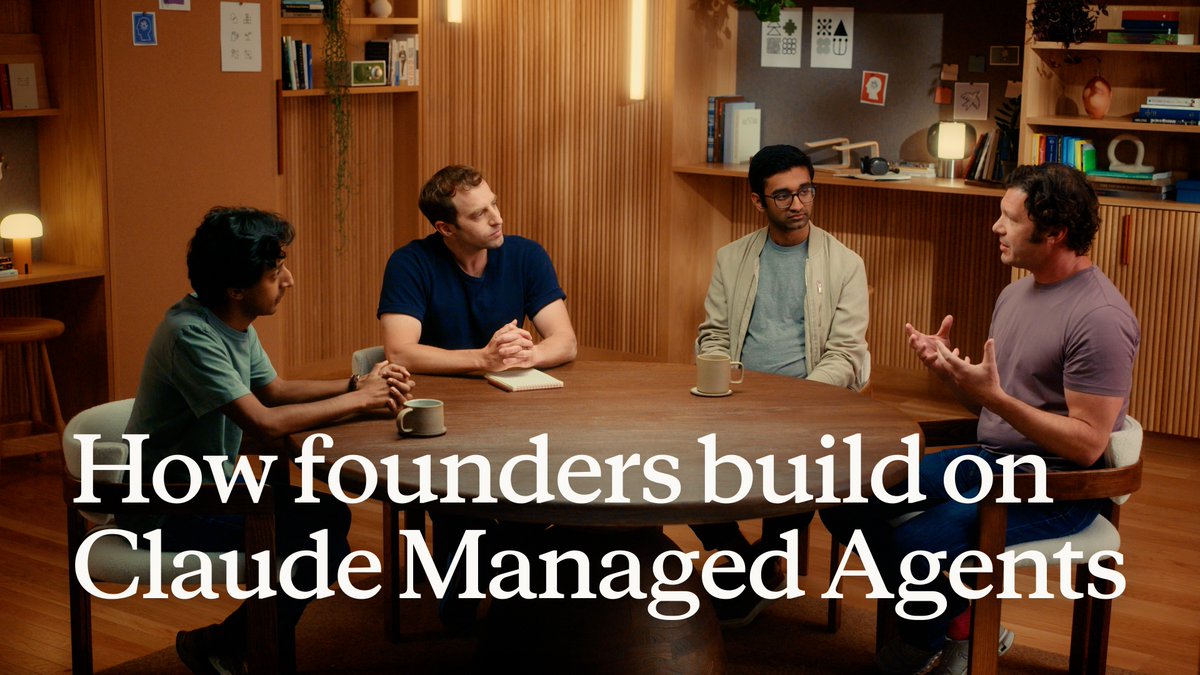
We work with a lot of early-stage teams through Claude for Startups. At Frontier Day we asked a few of the founders what building a company on Claude looks like right now:
More on the program, including API credits and other benefits for venture-backed teams: claude.com/programs/start…
Join a Fable 5.1 Build Day near you! We'd love to see what you're building.
Claude@claudeai·Fable 5.1 Build Days start this week. The Claude community is hosting buildathons in cities all around the world from September 11–25. Bring a problem, an idea, or just show up and see what's possible. RSVP at luma.com/claudecommunit…
Here's how our team uses Claude Tag for on-call: When an alert fires in Slack, Claude pulls metrics, diffs deploys, and checks flags. It finds a likely cause and proposes a fix, which we can approve and merge. Every minute counts, so we love that it starts right away!
New in Claude Code: claude plugin eval See what value your plugin is adding, or if it needs more work. You can create test cases, run your plugin or skill against those test cases, score those runs, then run each case again without the plugin to see the differences.
Start in your plugin's folder and run `claude plugin eval init` You tell Claude what good and bad output looks like and bring a few real prompts. Claude drafts the test cases and checks, pilots the suite, and tells you what a full run will cost.
Two fresh updates to Claude Managed Agents: First, we've added a session viewer to the ant CLI. `ant beta:sessions connect` attaches your terminal to a running session, and `--web` opens a web UI served from localhost.
We've also added auto mode to Claude Managed Agents. With `auto`, Claude reviews each tool call based on your intent in `user.message` events and decides whether to run the tool call, deny it, or ask you for input.
You can pop out any pane in the Claude Code desktop app into its own window. Drag the diff or terminal to a second screen while Claude keeps working in the main window, then dock it back whenever you want. You can also run sessions side-by-side or stacked.
Our CI team's on-call first responder is Claude Tag. It reads alerts, metrics, and logs, then writes a SITREP and keeps a lessons.md as it learns. We're sharing our setup, including a template and skills, and hope your team finds it as useful as we do:
Full blog post: claude.com/blog/ai-ci-cd-…
We sat down with the founders of @WisprFlow, @useactively, and @pendoio, who are building on Claude Managed Agents. Learn how they used features like outcomes, sandboxing, and memory to scale their products.
@WisprFlow @useactively @pendoio See the full video here: youtube.com/watch?v=hm8NzE…
We've added `ant apply` to the ant CLI. Now you can declare Claude Managed Agent environments, agents, skills, memory stores, and deployments as files in your repository and keep the API's resources in sync with them using `ant apply`. Docs: platform.claude.com/docs/en/cli-sd…
We're exploring a new way to let you extend and customize Claude Code: Function Hooks. Here's a couple videos showing what you'd be able to do. It hasn't shipped yet, we'd love feedback on this on our GitHub issue.
We're open-sourcing Claude Commerce Agents. This is a blueprint for building shopping and merchant agents, with reference implementations across retail, travel, telecom, and entertainment.
Retailers running shopping agents on Claude have seen carts up to 35% larger and shoppers 60% more likely to complete a purchase. See our blog to learn more about the architecture, latency & cost techniques, and eval practices: claude.com/blog/the-anato…
Computer use in the Claude Code desktop app now runs in the background. Claude works in the apps you've allowed it to while you keep working. It's already on if you've used computer use before, or turn it on in Settings > General. In beta on Pro and Max, macOS only.
Learn more: code.claude.com/docs/en/deskto…
With Fable 5.1 out today, we've also reset 5-hour and weekly limits for all users.
A common technique for distillation attacks involves extracting the model’s chain of thought. To make these attacks more difficult, we are introducing a change to the Messages API: it will no longer be possible to edit Claude's context prior to thinking blocks in a multi-turn conversation. We've done this in the least disruptive way we can: it applies only to new accounts using Fable 5.1 (distillation often makes use of large numbers of new, fake accounts), although we plan to roll out this change to all users for future model releases. We hope to find better solutions to distillation attacks in the long run. t.co/km7CtFVNyV
Pick Fable 5.1 from the model picker in Claude Code, or use claude-fable-5-1 on the Claude Platform. We’ve published our own learnings in our prompting guide, and we updated the `claude-api` skill to help you migrate your integration. t.co/LE7yzP8h0R t.co/96cYTlEaKy