@GoogleResearch
Impossible? Let’s see. From algorithms to neuroscience to AI, Google Research strives to progress science, advance society & improve billions of people’s lives.
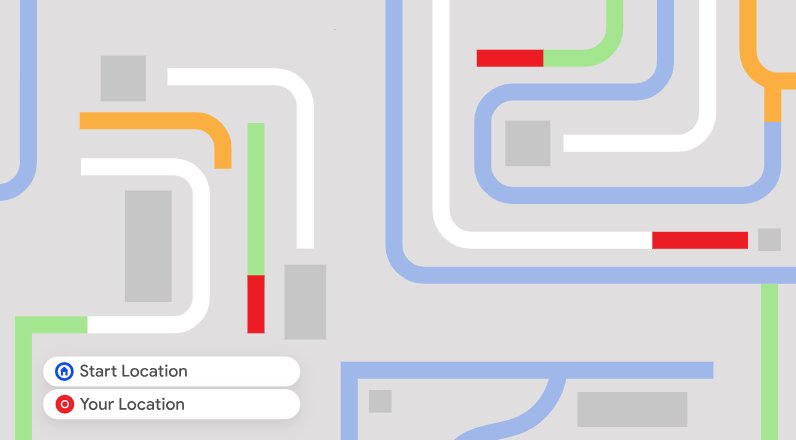
How do goods travel 450 miles overnight? It’s thanks to careful logistics optimization, particularly in the middle-mile segment, but optimizing these networks is difficult without public data. MilleMiglia provides a standardized benchmark, using spatial clustering and gravity models to simulate realistic scenarios for middle-mile delivery problems. Learn more: t.co/v4zQUMuxcf
"The best way to predict the future is to invent it." In a deep dive with VP, Google & GM, Google Research @ymatias on The Google Research Podcast, @sineadbovell explored how AI is transforming science & interfaces: 🔹 Ambient AI & GenUI: Interfaces that adapt in real time to how you think and learn. 🔹 Virtual Labs: Tools like AI Co-Scientist turning multi-year hypothesis generation into 3-day sprints. 🔹 Scientist as Architect: AI gives every student & researcher the resources they need to focus on asking better questions and exercising critical judgment. AI isn't replacing the researcher — it's an amplifier for human curiosity and judgment. 🔬⚡ 👉 Tune in to our pilot episode to hear the full conversation: t.co/WZ8xdR0Q9b
"The best way to predict the future is to invent it." In a deep dive with @ymatias on The Google Research Podcast, @sineadbovell explored how AI is transforming science & interfaces: 🔹 Ambient AI & GenUI: Interfaces that adapt in real time to how you think and learn. 🔹 Virtual Labs: Tools like AI Co-Scientist turning multi-year hypothesis generation into 3-day sprints. 🔹 Scientist as Architect: AI gives every student & researcher the resources they need to focus on asking better questions and exercising critical judgment. AI isn't replacing the researcher — it's an amplifier for human curiosity and judgment. 🔬⚡ 👉 Tune in to our pilot episode to hear the full conversation: t.co/WZ8xdR0Q9b
Today we explore the future of practice. We harness generative UI with learning design guardrails to give teachers the ability to generate guided, learning interactive simulations — for every topic & student. Read more + check out the sample library with 30+ STEM interactives →t.co/eahbkSz4JW
Spanning over 20 years, check out the latest in our AI language research in the 🧵⬇️
 Yossi Matias@ymatias·
Google’s work in language research spans over 20 years, beginning in 2006 with Google Translate. Today, these technologies power interactions in over 300 languages, reaching more than 7 billion people—86% of the global population. However, translation and text processing alone are insufficient; systems must reflect how people communicate in the real world across diverse cultural nuances. Highlights on the latest projects in AI language research👇🧵
Introducing Retrieve-for-Train: a framework that accelerates complex AI search by replacing heavy autoregressive inference with a lightweight diffusion model. This allows for instant, expert-level search slates at a fraction of the cost. Learn more: goo.gle/4xuV3lB
Today, we are proud to share the new white paper, “How Google AI is reshaping crisis resilience,” bylined by @ymatias and Kate Brandt. It outlines how we’re building state-of-the-art AI models and working with global partners to predict natural disasters earlier and provide warnings so communities can take action before crises strike. The vision? A world where no one is surprised by a natural disaster. A few highlights: Riverine Floods: Forecasting up to 7 days advance across ~150 countries. Partners like GiveDirectly translate early warnings into anticipatory aid, such as direct cash transfers before floodwaters hit. Urban Flash Floods: Predictions up to 24 hours in advance using our Groundsource methodology powered by Gemini. Cyclones: Providing forecasters with an extra day of critical lead time. Wildfires: Tracking active fire boundaries across 34 countries and making the information available on Search and Maps. Read the white paper: t.co/uMq1IzqWF3
Can AI build new knowledge from experience? Join Google researchers Dima Damen and Viorica Patraucean alongside Yilun Du for the #ECCV2026 Panel today at 10:00am CEST in the Arena Room as they discuss the future of AI learning loops: eccv.ecva.net/virtual/2026/p… @GoogleDeepMind
If you missed the earlier session, join Gabriele Berton and Ye Xia today at 12:00pm CEST at the Google booth (#2) for a Demo & Q&A on TIPSv2 and spatial vision-language pretraining. Explore more: gdm-tipsv2.github.io #ECCV2026
 Google Research@GoogleResearch·
Discover how enhanced patch-text alignment advances vision-language pretraining at #ECCV2026. Join Gabriele Berton and Ye Xia at the Google booth (#2) today at 1:00pm CEST for an interactive showcase of TIPSv2. Check out the paper and demo: gdm-tipsv2.github.io @GoogleDeepMind
Introducing ToolGrad: an efficient framework for generating tool-use datasets. By generating ground-truth tool-use chains before prompts, it achieves a nearly 100% pass rate and improved LLM tool-use performance. More: goo.gle/4xNKTNH
Congratulations to Google DeepMind Researcher, Christine Kaeser-Chen and the Fine-Grained Visual Categorization (FGVC) Challenge Series team on the PAMI Mark Everingham Prize at ECCV 2026! 🏆 Thank you for your lasting contributions to the computer vision community. Well deserved! 👏
Interested in research opportunities at Google? Join our Google recruiting team today at 4:30 PM CEST at the Google booth (#2) for a Careers Spotlight Q&A! Learn all about Google Internships and the Student Researcher Program, and connect directly with our team. #ECCV2026
Discover how enhanced patch-text alignment advances vision-language pretraining at #ECCV2026. Join Gabriele Berton and Ye Xia at the Google booth (#2) today at 1:00pm CEST for an interactive showcase of TIPSv2. Check out the paper and demo: gdm-tipsv2.github.io @GoogleDeepMind
Attending #ECCV2026? Join Mohit Goyal at the Google booth (#2) today at 12:00pm CEST for a demo and Q&A on 'Perception, Not Reasoning, Limits Video Spatial Understanding' to explore how spatial perception enhances to visual language models. Stop by to ask your questions! t.co/HhmPOh93WS
Welcome to #ECCV2026! 🌟 Google is proud to be a Diamond Sponsor at @eccvconf in Malmö, Sweden (Sept 10–12). Visit us at booth #2 to explore our latest research, connect with our team, and see live demos! Learn more: goo.gle/ECCV2026 #GoogleResearch
Introducing WeatherNext 3! Built by @GoogleDeepMind and @GoogleResearch, this is our most advanced & accurate AI weather model, and now includes real-time satellite data, hourly refreshes, higher resolution, precise precipitation forecasting, and clean energy variables. Read the blog: t.co/zlSx28IGTv Build with WeatherNext 3: t.co/lgpAPN4u65 More about Google Earth AI for planetary intelligence: t.co/tadPbAJv4b
Today on the blog, we evaluate ways to improve cross-population genetic risk prediction. While transfer learning from European cohorts improves prediction in small populations, it degrades accuracy as target cohort sample sizes grow. Learn more: goo.gle/4zR9XFf
Introducing a complete map of the male fruit fly brain and central nervous system, created in partnership with @HHMIJanelia. With over 166,000 neurons, this is the largest cellular brain map to date. Learn more: goo.gle/4qQTtIW
Methane is a potent greenhouse gas driving approximately 25% of human-induced warming. MAPL-EMIT is a deep-learning model that automates global methane tracking from space to enable scalable climate action. Read the full post and check out the dataset: goo.gle/4h4rNgr
Introducing TimesFM-3, a state-of-the-art time series foundation model that enables accurate multivariate time series forecasting in a single forward pass, significantly outperforming other forecasting models across major benchmarks. More on the blog →goo.gle/4x5WGpD
Introducing the planetary prediction engine: An experimental research capability that automates global geospatial modeling workflows. From predicting public health outcomes to improving food security, we are simplifying planetary-scale analytics. Learn more: t.co/EGhcEMqZxX
We are proud to share that Dr. Marian Croak is on @TIME’s TIME100 AI list of 2026! This honor celebrates her incredible leadership and her legacy as a pioneer in AI. Check out her profile: time.com/collection/tim… #TIME100AI
Introducing GlucoFM, a lightweight, self-supervised continuous glucose monitoring foundation model that separates metabolic baselines from transient spikes, producing transferable representations and setting new performance standards across diverse metabolic prediction tasks, such as diabetes risk assessment, insulin resistance, and post-prandial glycemic response. Learn more →t.co/PA7wpFz2xo
Learn about AgentHands, an LLM-powered XR prototype that augments conversational agents with synchronized, expressive hand gestures to provide spatially grounded guidance, bridging the mental mapping gap and enhancing user engagement in physical tasks: goo.gle/4gsa0OJ
How far in advance can you predict a flood? Today, AI models can forecast riverine floods up to 7 days ahead and urban flash floods up to 24 hours in advance. In this first episode of "Ask a Scientist", Senior Staff Research Scientist Deborah Cohen sat down with Chris Sotelo to talk through how our Climate Crisis Resilience team built Flood Hub and Groundsource to bring flood alerts to 2 billion people across 150 countries. We’ve also open-sourced our hydrology modeling framework on GitHub so researchers and meteorological agencies can build on it. Watch below, and read the Q&A on News from Google: t.co/qsek6aa4Lk
You can also watch on YouTube: youtube.com/watch?v=LuRpA8…
How far in advance can you predict a flood? Today, AI models can forecast riverine floods up to 7 days ahead and urban flash floods up to 24 hours in advance. In this first episode of "Ask a Scientist", Senior Staff Research Scientist Deborah Cohen sat down with Chris Sotelo to talk through how our Climate Crisis Resilience team built Flood Hub and Groundsource to bring flood alerts to 2 billion people across 150 countries. We’ve also open-sourced our hydrology modeling framework on GitHub so researchers and meteorological agencies can build on it. Watch below, and read the Q&A on News from Google: t.co/qsek6aa4Lk
You can also watch on YouTube: youtube.com/watch?v=LuRpA8…
Today we present Mobility-Embedded POIs (ME-POIs), a novel mobility-informed framework that improves text-based place representations derived by language models, allowing AI models to understand the aggregate activity rhythms of places over time. More →goo.gle/4xMeO8O
Finding clinical signals in large-scale health sensing data streams is quite challenging. We introduce a biomarker discovery framework that pairs hypothesis generation with adversarial validation to discover rigorous digital biomarkers alongside human experts. Read more: t.co/w1vKjAA5kw
We've launched Operation Blue Skies, in partnership with the UK government and aviation leaders, to continue our work addressing the climate challenge of contrails. Learn more in 🧵 from @ymatias, VP, Google & GM, Google Research ⬇️
Yossi Matias@ymatias·Contrails account for roughly one-third of aviation's total climate impact. We are making a major step in our work on mitigating aviation's climate impact with the launch of Operation Blue Skies — the world’s first state-backed trial to avoid contrails at the scale of an entire oceanic airspace. We’ll use our AI models to predict where contrail-sensitive regions are and deviate aircrafts to avoid forming contrails, while using machine learning on satellite imagery to track and verify our impact.🧵
Today on the blog, we demonstrate the feasibility of a deep learning approach estimating body composition from smartphone photos, to predict insulin resistance with accuracy comparable to DXA scans in a clinical research setting. Read more →goo.gle/4xIGxHj
Today we discuss knowledge profiling, a behavioral framework that measures both encoding and recall, and use it to examine the underlying bottlenecks of factuality in frontier LLMs. Read more →goo.gle/4wXia92
Are you an academic researcher, non-profit, or innovator working on scalable climate solutions? The 2026 Google Carbon Removal and Superpollutant Elimination R&D Awards are open now for the next few weeks. Submit your project proposal before September 25th. Details: t.co/fJ0T1y9hZb
We’ve advanced AMIE, our research medical AI system, to support real-time video consultations. Our latest study demonstrates expert-level performance in a randomized, controlled trial with 300 simulated consultations. Read the blog to learn more: t.co/mYczy0EWhs t.co/yn2ehIo9Kk
Last chance for AI trivia today at 5pm! Join Sebastian Bodenstein at the @DeepIndaba Google booth for the AI Research Foundations Quiz. Test your knowledge of language models and win prizes! #DLI2026 x.com/GoogleResearch…
Another chance to see WeatherNext in action! Today at 2:30pm, join Ilan Price at the @DeepIndaba Google booth for a demo of Google DeepMind's AI-based weather forecasting models. See how AI predicts tropical cyclones! #DLI2026 x.com/GoogleResearch…
Missed the first session? Today at 1:30pm, you have another chance to join Alex Goldin at the @DeepIndaba Google booth for a Q&A on the sociotechnical implications of AGI. Come discuss your research priorities! #DLI2026 x.com/GoogleResearch…
Catch Ilan Price today at 2:30pm at the @DeepIndaba Google booth for a demo of WeatherNext, Google DeepMind's AI-based weather and tropical cyclone forecasting models. See how the model performed during last year's cyclone season! #DLI2026
Think you know how language models work? Today at 1:30pm, join Sebastian Bodenstein and AIMS at the @DeepIndaba Google booth for a fast-paced quiz based on the Google DeepMind AI Research Foundations course. Test your intuition and win prizes! #DLI2026
What do you think are research priorities as we prepare for AGI? Today at 2:30pm, join Alex Goldin at the @DeepIndaba Google booth for a Q&A on the sociotechnical implications of AGI. He'll also share recent work from the Post-AGI Research Team at Google DeepMind. #DLI2026
We're proud to be Mawenzi level sponsors of @DeepIndaba 2026 in Lagos, Nigeria! At #DLI2026? Drop by the Google booth to learn how we're leveraging ML and AI for sustainable solutions, check out our demos and Q&A sessions! Learn more about our participation: t.co/agDINT1qdC
Introducing the Science One Framework, an experimental autonomous research prototype that builds verifiable evidence chains. We demonstrate how natively maintaining these chains eliminates hallucinated citations and enables reproducible AI science. Read the blog to learn more: t.co/sRchtF605B
Today we share an in-situ comparative research study of a set of experimental prototype AI agents exploring how conversational AI might conduct end-to-end symptom interviews & differential diagnostic assessment for research benchmarking purposes. More →goo.gle/3RQqt79
Today we announce a new paradigm for quantum control. By integrating reinforcement learning with quantum error correction, we enabled a quantum computer to continuously adapt to drift, stabilizing the system during computation. This improved logical stability 3.5x. Learn more: t.co/U1jTSmFrdQ
What drives a diffusion model's creativity (i.e., its ability to generate novel data rather than memorize)? Today we show this is a mathematical consequence of neural network regularization causing score smoothing and interpolation. Read the blog to learn more: t.co/menk2a3Xy6
No one should ever be surprised by a natural disaster. ✨ That is our north star for crisis resilience, as highlighted by @ymatias, GM of Google Research and Google Crisis Resilience Lead, where he also shares how we're using AI to predict floods, wildfires, and extreme weather to help keep communities safe globally. 🌍👇 Explore our work: t.co/Oy9FOWUap0 Read the latest blog on our progress: t.co/q4a8AKIOmQ
How does quantum computing help determine complex molecular structures? Google Quantum AI's Willow chip demonstrates the first-ever algorithm to achieve verifiable quantum advantage on hardware. Researchers from the team take you behind the scenes of this breakthrough that marks a significant step toward the first real-world applications of quantum computing. t.co/qEOuy0pHhv
In 2023, we collaborated with the World Health Organization to launch Open Health Stack, a suite of open-source tools to help developers build secure, next-gen digital health solutions. Today, we’re announcing that we’re transferring the code and assets to the Linux Foundation which will launch the new Open Health Stack Software Foundation (OHS-SF). This will provide a vendor-neutral, community-led home for the future of these essential building blocks for digital health. We’re excited to see how this empowers the developer ecosystem and local innovation. Learn more: t.co/r0q0MVJSRU
Introducing SensorFM, a large-scale Sensor Foundation Model that learns from 1 trillion-minutes of unlabeled wearable data drawn from five million consented participants. SensorFM learns a single, reusable representation of sensed human physiology that transfers across cardiovascular, metabolic, sleep, and mental health, as well as lifestyle and demographic factors. More →t.co/lbi1DG0zAW
Krzysztof Choromanski returns to the Google booth (#B206) to explore practical robotics research today at 3pm. Learn about Gemini Robotics models, 3D Transformers, and efficient techniques for object detection. #ICML2026 x.com/GoogleResearch…
Learn more about how Isomorphic Labs' Drug Design Engine is using artificial intelligence to help solve disease. Join Agnieszka Podsiadlo and Andreas Loukas today at 3:00pm at the Google booth (#B206) to discuss AI healthcare pipelines. #ICML2026
Join Vahab Mirrokni and Michael Galkin at 12:30pm today at the Google booth (#B206) for a session on graph foundation models. Learn how generalizable graph learning improves systems and coding, driving 20% datacenter efficiency gains and optimizing database queries. #ICML2026
How do we ensure multimodal foundation models remain reliable when faced with real-world distribution shifts? Meet Naman Goyal and Jenny Ni today at the Google booth (#B206) to explore how small changes like cropping, dimming, or compression can impact both a model's answers and its verification evidence. Discover why deployment reliability is tested trust, not just a clean benchmark score. #ICML2026
How can we map deep research ideas into practical robotics? Join Krzysztof Choromanski today at 11:00am at the Google booth (#B206) to explore Gemini Robotics models, 3D Transformers, and object detection techniques. #ICML2026
Pluralis v0.1 is a novel multimodal, multi-regional, and multilingual dataset built from a culture-first perspective. Meet Lora Aroyo today at 9:30am at the Google booth (#B206) to explore localized safety evaluation paradigms. #ICML2026
Congratulations to the @GoogleDeepMind authors of "Asynchronous Methods for Deep Reinforcement Learning", recipient of the #ICML2026 Test of Time Award. This work shows that asynchronous actor-critic succeeds on a wide variety of continuous motor control problems as well as on a new task of navigating random 3D mazes using a visual input.
Next up at the booth today at 3:00pm, explore how Gemini Omni unlocks video creation in new ways. Visit Sarah Xu, Miaosen Wang, and Minkai Xu at the Google booth (#B206) to learn more and view our live capabilities overview. #ICML2026
Co-Director is a hierarchical multi-agent framework that solves the challenge of narrative drift in long-video generation. Meet Yale Song and Yiwen Song today at 3:00pm at the Google booth (#B206) to see generative storytelling in action. #ICML2026 Watch more here! t.co/cCjcCU3Vel
Toby Staines and Michal Kazmierski are heading back to kiosk 1 at the Google booth (#B206) today at 12:30pm. Stop by to explore AlphaEarth Foundations and see how this embedding field model enables planetary geospatial insights. #ICML2026 x.com/GoogleResearch…
Next up at the booth today at 12:30pm, see how Gemini collaborates with artists to design complex origami. Join Tom Zahavy, Xidong Feng, and Shaobo Hou at the Google booth (#B206) to see abstract ideas turn into mathematically valid physical art. @GoogleDeepMind #ICML2026 Read more about it here: t.co/mUG1Wz7fCo
Next up at the booth today at 12:30pm, see how Gemini collaborates with artists to design complex origami. Join Tom Zahavy, Xidong Feng, and Shaobo Hou at the Google booth (#B206) to see abstract ideas turn into mathematically valid physical art. #ICML2026
Coral NPU provides a glimpse of the future of LLMs on low-power platforms. See English-to-target language translation running on a low-power Torq-Coral NPU with Gregory Kielian today at 12:30pm at the Google booth (#B206). #ICML2026
Meet Toby Staines & Michal Kazmierski today at 11:30am at the Google booth (#B206) to learn about AlphaEarth Foundations. This embedding field model yields a unified representation of the Earth's surface by assimilating multiple remote sensing data sources. #ICML2026
Visit the Kaggle Game Arena today at 9:30am at kiosk #2 where frontier models compete in live environments. Stop by to browse benchmarks and leaderboards with Yuting Han, Lucy He, and Tiffany Xiang at the Google booth (#B206). #ICML2026
How can we address the scarcity of data required for specialized AI? Join Hamza Harkous, Tim Davidson, and Cesar Ilharco today at 9:30am at the Google booth (#B206) to learn about Simula, a framework for synthetic dataset design. #ICML2026
Three new FireSat satellites are officially in orbit. 🚀 This launch is a major scaling milestone for the Earth Fire Alliance’s mission to provide continuous, high-resolution wildfire detection. See how we're working together with the @EarthFireAll & other partners to put AI to work for climate resilience: t.co/VOjbEvySIh
Today on the blog, read all about how we demonstrate the effect of coordination in routing on improving road traffic efficiency. We show that rerouting even a small fraction of trips to disperse traffic can measurably improve driving speeds. More →goo.gle/4p5BL3A
Experience AI Scientist, a novel multi-agent system designed to automate the end-to-end scientific research pipeline. Meet Jinsung Yoon and Rui Meng today at 6:00pm at the Google booth (#B206) to learn how complex workflows reliably accelerate AI discovery. #ICML2026
Next up at the booth today at 3:00pm, explore a general sound separation system based on the fully unsupervised training of a generative flow matching model. Meet Henry Li and Robin Scheibler from @GoogleDeepMind at the Google booth (#B206) to listen to the output. #ICML2026
Can video models become general-purpose foundation models for vision? Join Priyank Jaini today at 3:00pm at the Google booth (#B206) to see how Veo 3 solves a broad range of tasks without explicit training, showcasing early forms of visual reasoning. #ICML2026
Yana Lunts, Sam Holt, Pavel Dubov, and Stefan Moser will be back at kiosk 2 at the Google booth (#B206) today at 3:00pm. Drop by to experience Project Astra firsthand and meet the team behind the research prototype. #ICML2026 x.com/GoogleResearch…
Curious how the universal assistant of tomorrow might look? Learn about Project Astra, a research prototype of a next-generation AI video and audio assistant. Meet Yana Lunts, Sam Holt, Pavel Dubov, and Stefan Moser today at 1:00pm at the Google booth (#B206). #ICML2026
Explore Vision Banana with Shangbang Long to experience state-of-the-art computer vision tasks including segmentation and depth estimation built from Nano Banana. Join us at the Google booth (#B206) today at 12:30pm. #ICML2026
How do we choose what models to run and what input to give them for every query that goes to Google Search? Join Andrew Gilchrist-Scott, Manik Panwar, Zihan Jiao, and Ramon Tuason today at 12:00pm at the Google booth (#B206) to discuss maximizing quality while minimizing compute. #ICML2026
Attending #ICML2026? Stop by the Google booth (#B206) to attend a demo, chat with researchers, and learn about our groundbreaking work across the field of machine learning. Find information about our conference engagement as well as the schedule of booth activities at t.co/rkrvNZl2Nr
Google is proud to be a Diamond Sponsor of the 2026 International Conference on Machine Learning (#ICML2026), kicking off on July 7th in Seoul, Korea! Attending @icmlconf? Come by our booth (#B206) to learn more about our work, including papers, workshops, and booth activities at t.co/rkrvNZl2Nr
Introducing TabFM, a foundation model designed specifically for tabular data classification & regression. This approach allows generation of high-quality predictions on previously unseen tables in a single forward pass. Learn more and try out the model →goo.gle/4eR7uku
Today we announce the expansion of our Heat Resilience data to cover 50+ global cities. By fusing satellite data, high-resolution imagery, and AI, we map building-level rooftop reflectivity to help urban planners mitigate extreme heat. Learn more: goo.gle/4aq5rlZ
Today on the blog we introduce a method to retrofit Multi-Token Prediction onto frozen production models, accelerating on-device inference without the inefficiencies of separate drafters. Learn more →goo.gle/4uS4hH7
Read all about how linear elastic caching minimizes total cache cost by framing page eviction as a ski rental problem, using lightweight machine learning to optimize the trade-off between memory footprint and cache misses. Check out the blog →goo.gle/4oONMdt
Google researcher Dmitrii Kochkov was recently featured in @sciam's inaugural Young American Scientists list, as one of 28 early-career researchers whose work is shaping the future of science and society. He helped build the seasonal forecasting models that allowed Indian farmers to predict monsoons up to one month in advance — which could help ensure food security as climates change. #SciAmYoungScientists t.co/QFBErFdsNy
Check out the article: scientificamerican.com/article/dmitri…
At yesterday’s AI for the Planet event, we shared the progress we’ve made toward building AI tools to support our vision for crisis resilience efforts: a world where no one is surprised by a natural disaster. We’ve made critical information accessible via Google products that are used by billions, and partnered with governments and organizations around the world to help communities prepare for and respond to these crises.
Read more about our progress in the blog by @ymatias, GM of Google Research & Google Crisis Resilience Lead: goo.gle/3SJ928x
Today we present a study on how reasoning unlocks parametric knowledge in LLMs. We identify two key driving mechanisms, a computational buffer effect and factual priming, and suggest ways that can help build more reliable models. Learn more: goo.gle/44taazO
At yesterday’s AI for the Planet event we shared our north star for crisis resilience: no one should be surprised by a natural disaster. We’re leveraging AI, building helpful product features and collaborating with global partners to keep communities around the world safe and resilient in the face of natural disasters.
Read more about our progress in the blog by @ymatias, GM of Google Research & Google Crisis Resilience Lead: goo.gle/3SJ928x
New research published in @Nature with @GoogleDeepMind shows how AMIE utilizes long-context capabilities of Gemini models to ground its clinical reasoning in authoritative medical knowledge. In a multi-visit study with patient actors, AMIE demonstrated physician-level capabilities in longitudinal management reasoning, while scoring significantly higher in plan preciseness and guideline alignment. See the full story from @GoogleForHealth below 🧵↓
Today we introduce a new vectorized dataset for mapping fine-scale ecological features, such as hedgerows, that often go undetected by standard satellites. This precision provides a new roadmap for addressing climate & biodiversity challenges without compromising food security. More: t.co/NRU3hrqvrd
"I have yet to find a problem that is too difficult to solve. It's a question of how much effort you need to put into that." — @ymatias On the latest Release Notes, Yossi, VP, Google & GM, Google Research, sat down with @OfficialLoganK to discuss how Google teams drive
You can watch the full episode on YouTube: youtube.com/watch?v=FPBwad…
Today on the blog, we discuss a pathway for the second life of phones through the exploration of “phone cluster computing”, which can directly reduce the environmental footprint of computing by avoiding the need for further raw material extraction. More →goo.gle/4aJe5vO
The golden age of research ✨ x.com/ymatias/status…
Presenting recently published findings on how dermatology AI tools may help laypeople with their own skin-related questions, such as increased ability to name conditions, & some benefits in determining what next steps to take. Read more →goo.gle/3S5rNmv
🚀 Introducing Gemini-SQL2, our breakthrough text-to-SQL capability powered by Gemini 3.1 Pro! We've achieved state-of-the-art results on the highly competitive BIRD benchmark, translating natural language into execution-ready SQL queries. 🧵👇
📊 Data subtlety & complex business contexts make generating accurate SQL from natural language notoriously hard. Per the BIRD benchmark, which measures execution-verified accuracy, GeminiSQL-2’s SQL doesn't just look right, it also runs successfully.
Presenting Regularized f-Divergence Kernel Tests, a new framework for auditing machine unlearning and differential privacy. This method is more sensitive to localized data shifts and requires fewer samples than traditional tools. Learn more: goo.gle/4uoeZ8h
Congratulations to the authors of "Efficiently Reconstructing Dynamic Scenes One D4RT at a Time", recipient of the #CVPR2026 Best Paper Award! 🏆 arxiv.org/pdf/2512.08924 @GoogleDeepMind