
Microsoft Research
@MSFTResearch
We advance science and technology to benefit humanity.
100 postsÚltimo em 22 de out, 13:09Atualiza a cada 15 min
Flint-interactive gives AI agents a language for creating interactive visualizations. Click a chart, filter data, highlight related content, and explore beyond the view the author originally chose. msft.it/6016aaFOu
AI agents are writing more code. How can developers ensure that code is correct? Microsoft Research’s Proof-Driven Development (PDD) Kit explores a more rigorous approach: it translates a developer’s intent into a formal specification, then uses formal verification to prove that generated code meets it. PDD Kit works with Verus for Rust and is integrated with @GitHubNext’s Chopin, bringing formal methods into an AI-assisted development workflow for teams. See the work in action at @github Universe, Oct. 28–29, 2026.
Join @GitHubUniverse Oct 28–29 in SF or online. Explore AI, security, and open source with hands-on sessions, product updates, and devs from around the world. msft.it/6015aa5OS
For decades, a key question about the challenges of high-dimensional computation resisted proof. New research resolves the KLS conjecture, removing a major barrier to understanding the efficiency of randomized algorithms used throughout science and computing. t.co/tDL64JAAho
What keeps you hopeful when the problems you're working to solve feel overwhelming? For Microsoft Research's Chris White, it's knowing there's something he can do. Catch the latest episode of the Microsoft Research Podcast. msft.it/6014av214
Last week at the OCP Global Summit, @MediaTek demoed a live MicroLED optical link in a standard pluggable form factor, built on technology developed at Microsoft Research: inexpensive LEDs instead of copper or lasers to send many parallel streams of data at low power. This is a meaningful next step toward AI datacenters that are more reliable and use less power.
 MediaTek@MediaTek
Co-developing the future of AI interconnects with @Microsoft. 🌐 We’ve taken our pluggable MicroLED Active Optical Cable (AOC) from concept to reality—demonstrated live at OCP 2026. As AI scales, conventional laser-based AOCs face power and cost challenges. Our MicroLED optical engine, co-developed with @MSFTResearch and @Azure, is designed to deliver lower power, lower cost and enhanced reliability. Together, we are building the physical foundation for the AI era. #DataCenter #CustomSilicon #AILiveDemo
This week at #OCPSummit26, @MediaTek demoed a live MicroLED optical link in a standard pluggable form factor, built on technology developed at Microsoft Research: inexpensive and low-power LEDs instead of copper or lasers to move data in AI datacenters.
MediaTek@MediaTekCo-developing the future of AI interconnects with @Microsoft. 🌐 We’ve taken our pluggable MicroLED Active Optical Cable (AOC) from concept to reality—demonstrated live at OCP 2026. As AI scales, conventional laser-based AOCs face power and cost challenges. Our MicroLED optical engine, co-developed with @MSFTResearch and @Azure, is designed to deliver lower power, lower cost and enhanced reliability. Together, we are building the physical foundation for the AI era. #DataCenter #CustomSilicon #AILiveDemo
Zero-knowledge proofs can verify computing results without rerunning workloads or exposing sensitive data. Magnetar helps bring them into the mainstream with support for standard programming languages, major speed gains, and quantum-resistant security: msft.it/6016atJb6
Weather forecasts are unreliable past two weeks, leaving a crucial gap for farmers and others. Probabilistic Bias Correction improves extended forecasting, taking top honors in a global competition and showing promise for real-world use: t.co/lGiuzdAheY IMAGE CREDIT: Cooperative Institute for Research in the Atmosphere at Colorado State University and the National Oceanic and Atmospheric Administration (CSU/CIRA & NOAA)
AI does better when it acknowledges it needs clarification; Improving robot performance on vision-language tasks; How we learn from AI’s failures; Improving AI tutoring; Understanding our sense of smell; More efficient KV-cache memory storage msft.it/6019aSVIP
StudentSim is a research system for evaluating and improving AI tutoring tools before they are tested with learners. It models how individuals may engage with tutors, giving feedback to improve tutor performance across subjects like chess, writing, and mathematics: t.co/Sktw7dt8fj
The most important AI failures may not be the obvious ones. Microsoft Partner Research Manager Jennifer Neville explains to host Chad Atalla why “surprising failures” can reveal where human expectations about intelligence diverge from how AI systems actually work. t.co/mdh9Y7Y9GE
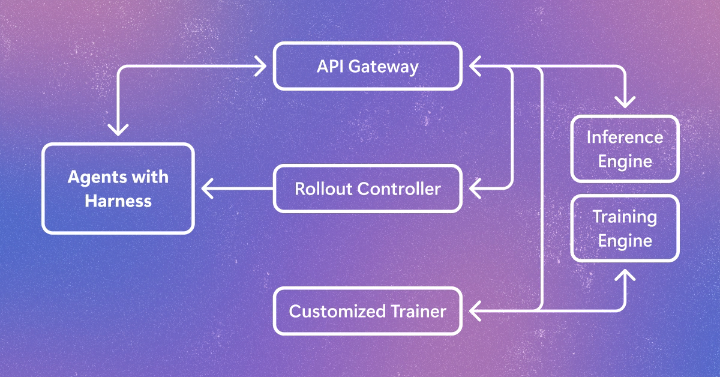
Training AI agents with reinforcement learning can be challenging because their tools, context, and decision-making are managed by complex frameworks. Agent Lightning connects existing agents to RL training, making it easier to improve them without rebuilding them.: t.co/oInaVHBmIS
Progress can be a winding road. Jennifer Neville discusses spinning her research wheels, taking a multiturn path to computer science, and pushing today’s AI systems with more practical evaluations. Catch the latest Microsoft Research Podcast episode.: msft.it/6183aW0lD
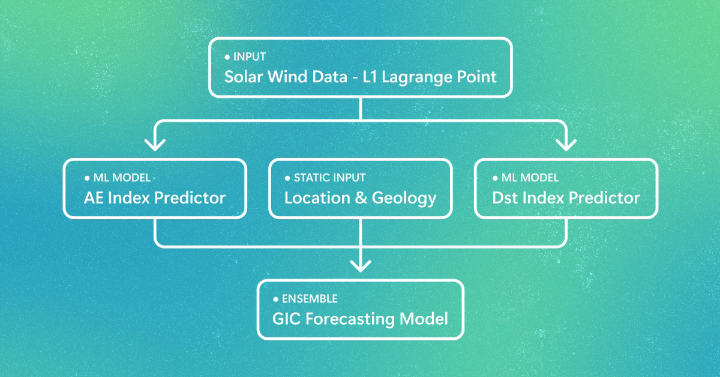
Extreme space-weather events can damage power systems on Earth and degrade GPS accuracy and satellite operations. A new machine learning system can predict where damage is likely to occur 30-60 minutes before a storm arrives: msft.it/6019aYXwh
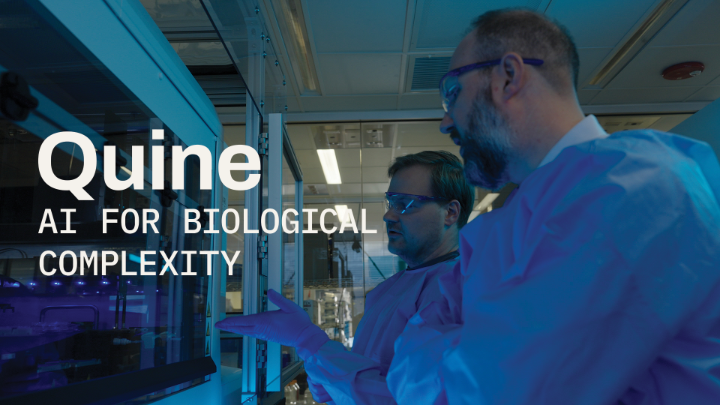
Biology doesn't operate in silos, and neither should the AI representation of it. Quine is an early-stage research effort to create a multimodal world model of biology. By connecting insights across biological scales and modalities, Quine helps scientists computationally search a space far larger than intuition allows and prioritize hypotheses before they reach the lab. Experimental results provide important feedback, helping researchers sharpen future research directions. t.co/gt8Dt2I5sa
Since launching a year ago, the Microsoft Research Asia — Singapore lab has established a strong foundation, deepened collaboration across government, academia, and industry, and explored how frontier AI research can create real-world value: msft.it/6019acwE5
Securing data when trusted hardware is compromised; monitoring underwater recordings to protect endangered whales; Living Library enables conversations with historical figures; AI builders should listen to the young people who will ultimately use it. msft.it/6013acHnt
Robots are getting smarter, but how can their hardware match that growth? New Microsoft Research findings show that moving AI inference beyond the robot can improve task success, boost efficiency, and support more advanced physical AI workloads. msft.it/6014agepg
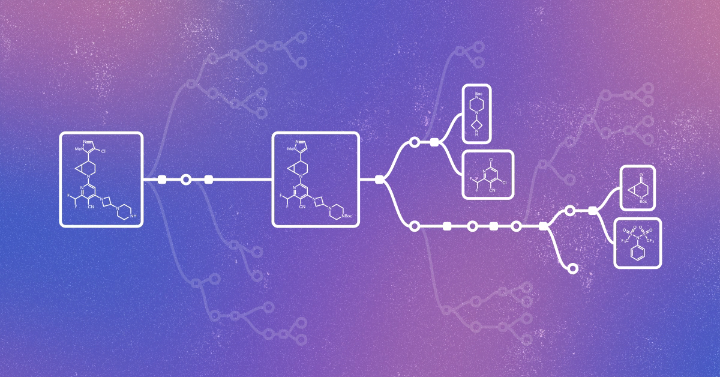
Custom-made molecules are advancing medicine, materials, and agriculture, but producing them is slow and expensive. A new Nature paper highlights RetroChimera, a predictive model that helps accelerate chemical synthesis, helping researchers explore a wide range of molecules.: t.co/BOfKphfhh3
A look at how coding agents behave at scale; evaluating AI models that find lymphoma lesions in PET/CT scans; understanding AI chatbot dependence; and advancing large-scale decision-making systems. Dive into the latest issue of Research Focus.: msft.it/6016abyrY
How is AI reshaping the way we work? Join researchers, builders, and practitioners at The New Future of Work Summit on Sept. 14 for practical workshops, live demos, and research-backed insights on AI and agents. Free and open to all. Register: msft.it/6013akn9U
What keeps you hopeful when the problems you're working to solve feel overwhelming? For Microsoft Research's Chris White, it's knowing there's something he can do. Catch the latest episode of the Microsoft Research Podcast.: msft.it/6012aXtSY
Curious about what a future in research could look like? The Microsoft Research Undergrad Internship Program offers hands-on research experience, mentorship, and a chance to explore advanced study. Rising juniors and seniors can apply for 12-week internships in Redmond, NYC, or New England. Apply by October 5: t.co/OXQ4sc75cB
Where can curiosity take a research career? Undergraduate research intern Matheus Kunzler Maldaner explores agentic systems and finds more than he expected in this first episode of our series, Research | Start Here: Inside the Internship. See where research can start ▶️
We're thrilled to celebrate two Microsoft Research papers recognized at VLDB 2026. Congratulations to the researchers. msft.it/6012aTYVm
Best Paper Award: Garnet: A Next-Generation Cache-Store for Accelerating Applications and Services Garnet reimagines the cache-store layer that powers modern applications and cloud services, helping deliver orders-of-magnitude higher performance and efficiency at scale without requiring any application changes. The Garnet system is also available for use as open-source software. t.co/s0dS6wVj0f
What if pathology foundation models could do more with less? GigaPath-Flash and GigaTIME-Flash cut computational demands while maintaining strong performance, opening the door to larger studies and broader exploration. msft.it/6012arcfr
We treat the way the world works now as normal. It isn't. Doug Burger, Amy Luers & Ishai Menache sit with a hard idea: modern civilization is a historical anomaly built on fossil fuels & exponential growth & AI may be the first tool capable of rewiring it. msft.it/6013azL6Z
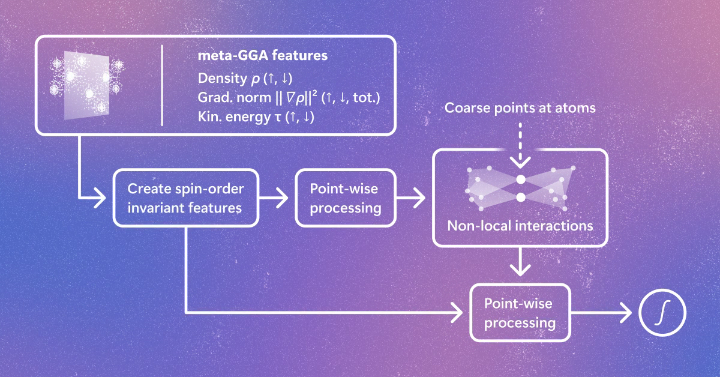
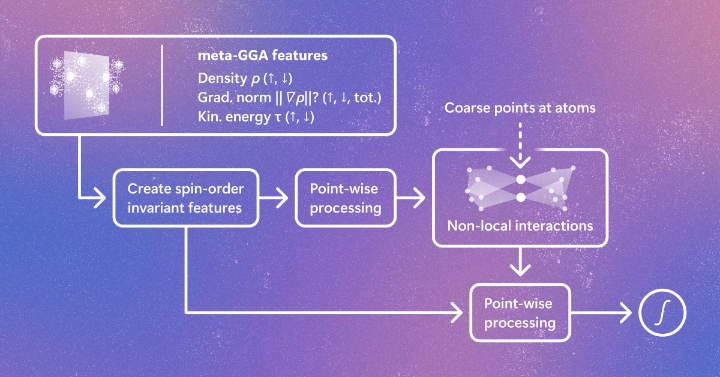
Skala 1.1, the updated deep-learning exchange-correlation functional from Microsoft Research, provides greater accuracy, expanded accessibility across the computational chemistry ecosystem, and a living benchmark to track computational performance. msft.it/6011aOXe5
Skala 1.1, the updated deep-learning exchange-correlation functional from Microsoft Research, provides greater accuracy, expanded accessibility across the computational chemistry ecosystem, and a living benchmark to track computational performance. msft.it/6016aMXZn
Every powerful new technology comes with trade-offs. The internet had them. Social media had them. Doug Burger, Amy Luers, and Ishai Menache explore AI’s climate impact and steering the tech to support a sustainable future. msft.it/6010azEQA
Microsoft is proud to be a part of SIGCOMM 2026. Check out our sessions, covering network traffic engineering, new load balancing strategy, adaptive photonic switching schedules, AI network simulation, and more. msft.it/6018aKgfp
A path, a fence, a knot. MindTopo sets a new benchmark for testing how AI understands topological relationships and highlights new opportunities to strengthen spatial reasoning and planning. msft.it/6011aH02S
Radiology AI is evolving beyond report generation. CARE-X explores a unified approach that combines flexible reasoning, calibrated predictions, and measurement-based tools for chest X-ray interpretation. msft.it/6015aHrqH
The best AI doesn't just scale, it adapts to the languages, cultures, people and communities it serves. Explore three playbooks created to help teams design, deploy, and evaluate AI systems with inclusivity in mind.
Paza: Guidance for building robust speech technologies for low-resource and multilingual languages, from data collection and curation to deployment and evaluation. msft.it/6016aEk68
Can AI learn pathology through clinical dialogue? Introducing PRISM2, a multimodal foundation model trained on pathology images and language from real pathology reports. Using simple question-answering, PRISM2 matches specialized cancer-detection systems across several benchmark tasks without requiring a separate model for each task. t.co/nFcMESL9Gh
Small language models learn to negotiate with SocialRL, PazaBench V2 expands speech AI evaluation across African languages, and EvoLib helps agents turn experience into knowledge. Plus: new methods for more reliable A/B testing and advances in AI-driven precision oncology. t.co/0N1CGFXZfj
Orchard is an open-source framework for the research community to train and evaluate AI agents across task types. It reduces complexity while supporting strong performance from smaller models by enabling researchers to reuse the same infrastructure. msft.it/6019a8fqP
Orchard is an open-source framework for the research community to train and evaluate AI agents across task types. It reduces complexity while supporting strong performance from smaller models by enabling researchers to reuse the same infrastructure. msft.it/6016a8Quj
Computer-use AI agents struggle with multi-step workflows like email and customer support. Echoverse trains agents in realistic environments rather than simply providing more training tasks, helping them improve as the tasks, tests, and environments evolve. t.co/8STvmt2miZ
LLMs do not get smarter just by remembering more. EvoLib turns experience into evolving knowledge, taking reusable skills and insights that help models learn and adapt across tasks long after deployment. msft.it/6019vh35f
Can AI help power the grid? MSR-led AI Foundations for Power Grids workshop at NeurIPS 2026 is accepting submissions until August 29 on benchmarks, model training, reliability, foundation models, and real-world deployment.msft.it/6010vAmsQ
How can AI help advance precision oncology? Explore Project Ex Vivo, a collaboration between Microsoft Research and the Broad Institute, with support from Dana-Farber Cancer Institute, that is using AI to better understand cancer cell states. Read the story in Signal Magazine: t.co/SPfCtqRFVs
Researchers Jenna Butler, Jake Hofman, and Rebecca Janssen spend a lot of time studying AI’s influence on how people do their jobs. On the Microsoft Research Podcast, they share their thoughts on what the future of work looks like in the age of AI. msft.it/6014vAqvm
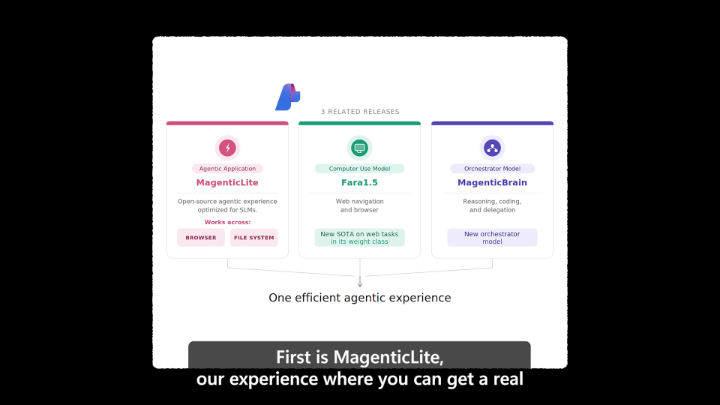
MagenticLite's models are now fully open source. MagenticBrain and Fara 1.5, previously available on Microsoft Foundry, are live on Hugging Face with open weights. The app, the harness, and every model in the stack are now open.
Quick recap: MagenticLite is an open-source agentic application, the next generation of Magentic-UI. It works across the browser and local file system in a single workflow. It was built around a bet: small models plus a codesigned harness can match frontier-scale agentic systems.
Today, we announce the second release of PazaBench, our benchmark for evaluating Automatic Speech Recognition (ASR) models across African languages.
We’ve significantly expanded coverage to support: ● 22 additional languages, now reaching communities across 38 African countries ● 1 additional ASR model ● Coverage expanded to 11 datasets ● Nearly 2x more test samples for robust evaluation
Aurora 1.5 scales open forecasting; Flint redefines visualization; FlowDAgger accelerates adaptation. Plus: AI agents crack Rowhammer defenses and memory reshapes conversational AI. msft.it/6019v4m9F
Recalling a new password after hours of distractions can be hard. Not for a transformer. Microsoft CVP Doug Burger & AI researchers Subutai Ahmad & Nicolò Fusi discuss the fundamental differences between human memory and machine intelligence. msft.it/6014vFsiu
A curious 3-year-old. A state-of-the-art AI model. Which is more intelligent? AI researchers Subutai Ahmad and Nicolò Fusi alongside Microsoft CVP Doug Burger discuss the nature of cognition and where today's AI systems fit in the range of intelligence. t.co/lbdhNo8zdO
Cryptographic code supports vital protections in modern computing systems. Learn how a new method helps verify code as developers write it while preserving speed and adaptability as it gets implemented and evolves. msft.it/6010v0gZw
Aurora 1.5 adds 22 more variables, hourly temporal resolution, and probabilistic ensemble forecasting to the Aurora foundation model, making it more useful for real-world weather, climate, and energy applications. msft.it/6017vInGR
Short chart specifications are easy to write, but often produce uninspiring results. Flint is an open-source visualization language that offers a middle path, letting AI agents create expressive charts from compact, human-editable specifications. msft.it/6011vxmcl
Among Microsoft’s 100+ accepted papers, 3 oral presentations, and 1 expo demo at ICML in Seoul, highlights include Fara 1.5 computer-use agents, critique-resilient benchmarking, expanded protein ML benchmarks with FLIP2, and improved LLM reasoning stability. t.co/m4x9AbcNUB
AI agents often fail because their instructions, or skills, are manually modified with no guarantee of improvement. Learn how SkillOpt turns skill editing into a training process, making agent behavior more reliable without changing model weights: msft.it/6012vsvEs
AI agents can't remember past conversations. They must constantly reload or retrieve context, which grows less efficient as tasks get longer and more complex. Memora solves this with a scalable memory system separating what’s stored from how it's retrieved: t.co/XZfOqbA705
What do people actually do with AI at work? A new analysis of five million M365 Copilot conversations has answers. Scott Counts breaks it down in a new video. And dive into the analysis here: msft.it/6011vqpbL
Following up with the social copy I’ve drafted: What do people actually do with AI at work? A new analysis of five million M365 Copilot conversations has answers. Scott Counts breaks it down in a new video. And dive into the analysis here: msft.it/6015vUHsh
Researchers introduce generative causal testing, which translates black box models into clear hypotheses and verifies them in the scanner, revealing what specific brain regions respond to in language. msft.it/6011vUtRd
Talos was built to help resolve a major bottleneck in genomic medicine: human review time. The open-source system recovered 90% of in-scope diagnoses while surfacing just 1.3 candidate variants per patient for expert review. msft.it/6014vUBwK
On the Microsoft Research Podcast, Microsoft’s Jaime Teevan, Jenna Butler, Jake Hofman, and Rebecca Janssen explore how looking at AI as more than a tool for automating tasks people are already capable of might open the door to new possibilities. msft.it/6011vo8cX
Can you remember a new password after listening to five hours of stories? A transformer can. AI researchers Subutai Ahmad and Nicolò Fusi explore the fundamental differences between human memory and machine intelligence with Microsoft CVP Doug Burger. msft.it/6016vllRa
ResNet has received the Longuet-Higgins Prize at CVPR 2026, recognizing research with proven, lasting impact. A decade after its publication, residual connections remain foundational to how modern AI systems are built, with over 320,000 citations and growing. t.co/VkRktbFkcT
30x faster analytics, GPU kernels generated automatically from SQL, AI matched to lab-grown tumor models for cancer treatment, and LLMs that learn across tasks without retraining. Dive into the latest issue of Research Focus: msft.it/6010vcYZ4
Project Ire examined a timely malware sample and determined its intent through reverse engineering—identifying LOTUSLITE characteristics even as most major EDR tools did not detect it. msft.it/6011viy4N
A new research effort called Encrypted Spaces explores an architecture for collaborative applications where data is encrypted, and operations are cryptographically verifiable. Learn more: msft.it/6017v9lNt
New research in Nature Methods from Project Ex Vivo shows AI models learn more from diverse cell states than from scaled datasets alone, a finding that could reshape how therapies are matched to patients. msft.it/6013vgE8l
A BTS look a first timer's experience at the MSR lab at Microsoft Build 2026—featuring the demos, the builders, and the conversations that made it worth the trip.
During the Inside Azure Innovations breakout at Build 2026, Microsoft Azure CTO, deputy CISO and technical fellow Mark Russinovich introduced Project Mosaic, an experimental optical interconnect technology from Microsoft Research Cambridge using micro-LEDs for low-power,
That’s a wrap on Microsoft Build 2026. Huge thank you to the researchers and team who brought it to life on the floor this week. If you missed what we shared, check it out here: msft.it/6015vjfld
What do the people who build the foundations for others to build on like to build themselves? The answers may surprise you, everything from sandwiches to the future. #MSBuild
You don’t have to be a developer. You can just build stuff. @shanselman on his first walk through the Microsoft Research Lab at #MSBuild.
You don’t have to be a developer. You can just build stuff. Scott Hanselman on his first walk through the Microsoft Research Lab at #MSBuild.
The sights and sounds of Microsoft Research at #MSBuild. Come see us at the Lab inside the Gateway Pavilion for Day 2.
A three‑month pilot in a Midwestern bottling plant shows what happens when AI moves beyond chat and into decision-making, where constraints shift, stakes are real, and answers must hold. msft.it/6015vjYUN
Day 1 of Microsoft Build is a wrap. A lot happened today, and we brought some of our favorite tools to the floor for developers to get hands-on with. Explore it all: msft.it/6019vjO9D
Weather forecasts thousands of times faster than traditional supercomputers. Hear from Kenji Takeda on Aurora at the Microsoft Research Lab at #MSBuild. Learn more: msft.it/6018vjGUA
Agentic experiences powered by small models that fit on your own device. Hear from Maya Murad on MagenticLite at the Microsoft Research Lab at #MSBuild.
Learn more: microsoft.com/en-us/research…
Microsoft Research is at BUILD 2026 this week, giving developers a hands-on look at some of the many AI-based models and tools they can use to accelerate innovation, enhance their capabilities, and quickly transform ideas into prototypes. msft.it/6010vjBUe
Welcome to Microsoft Build 2026. Step inside the Microsoft Research Lab, where developers are getting hands-on with the latest from MSR. Aurora’s forecasting models, Trellis 3D generation, Magentic UI, Mindful Memory, and more.
Microsoft Research is at #MSBuild! Come check out the Microsoft Research Lab on the 1st Floor of the Gateway Pavilion and stay tuned to our channels for more.
Evaluating agentic behaviors at scale, making the case for repositories over documents, and inviting researchers worldwide to tackle value alignment. Dive into the latest Research Focus. msft.it/6010vbyOi
Data Formulator introduces AI-powered analytics for enterprise data workflows. Data teams can easily bring enterprise data into an AI-ready workspace where users can explore, analyze, and visualize data with AI agents to turn raw data into actionable insights: